
Finding back to school activities for the first week of school can feel like a balancing act: you’re setting routines, building relationships, and trying not to lose your voice by Thursday. Whether you’ve been teaching for 20 years or you’re stepping into your first classroom, it helps to have go-to activities that actually work. You want students engaged, not eyeing the clock during another round of “Tell us three things about yourself.”
This list includes 15 back to school activities for the first week of school activities that students enjoy—and that help you learn about your class without sacrificing your sanity. Two of the ideas link directly to ready-to-go resources you can use right away.
1. Back-to-School Activities Student Brochures
This interactive interview brochure trifold is a great way to combine writing, reflection, and creativity. Students learn how to respectfully interview each other and ask questions about each other. Then they introduce each other to the class. It’s structured but still personal, and it gives you insight into students’ personalities and communication styles. Tip: Break up the introductions so that you do 5-6 each day. By Friday, each student has been introduced to the class.
2. One Word Poster Project
Instead of the usual “favorites” list, students choose one word that reflects their goals or identity and build a one word mini-poster around it. It’s thoughtful, visually appealing, and works well as a classroom display to start building a sense of community right away and the posters make engaging bulletin boards for Parent Night.
3. Classroom Scavenger Hunt
Whether digital or paper-based, this works well to introduce students to your classroom routines and expectations. Include tasks like “find where the absent work folder is” or “introduce yourself to someone with the same birth month.” It gets students moving and talking with purpose. A twist on this activity is to set out 10 items that relate to what you’ll be teaching this year. Ask students to discuss what each object is and how it might play into the classroom setting.
4. Four Corners: This or That Edition
Create a series of fun and low-stakes “this or that” questions (books vs. movies, morning vs. night) and have students move to the corner of the room that matches their answer. Then, have them chat with others in the same corner. It’s simple, interactive, and perfect for new classes. Here’s a list of Four Corners statements.
5. Would You Rather Back to School Activities
Put up a few funny or thoughtful “Would You Rather” prompts and have students choose one to write about. These short pieces give you a glimpse into their writing style and how they think, without the pressure of a formal assignment.
You’ll find 100 Would You Rather prompts here.
6. Goal Setting with a Twist
Instead of vague “do better” goals, have students create academic and personal goals in specific categories (reading, friendships, organization). Then revisit these in a few weeks. It’s great for reflection and gives you a sense of what students value.
7. Two Truths and a Lie—With a Written Spin
Ask students to write their two truths and a lie on an index card (without their name), then collect and read them aloud. The class guesses whose it is. It adds a fun guessing element and lowers the pressure for shy students. This also makes a great morning activity for each day of the first few weeks.
8. Classroom Expectations Sort
Instead of listing rules, give students behavior and routine scenarios and have them sort them into categories: “Respectful,” “Needs Work,” “Ask First,” etc. This encourages discussion and helps students co-create classroom norms. Learn 4 Go-To first week activities to build community and set a tone for the year.
9. Get to Know the Teacher Quiz
Flip the script! Create a short quiz about yourself (serious and silly facts), and see how many students can guess the right answers. It’s a fun way to show your human side and open the door for connection.
10. Silent Line-Up Challenges
Ask students to line up by birthday, height, or number of siblings—without talking. It encourages teamwork, problem-solving, and laughter. Add a reflection afterward: What worked? What was tough? This is a great activity for when you have 15-20 minutes left of school and want kids up and moving (but quietly).
11. Classroom Graffiti Wall
Put up butcher paper around the room with prompts like “What I want to learn this year” or “Best thing about middle school” or “My favorite memory from the summer” or “I’m most nervous about…” or “I’m most excited about…” You can even let students come up with some of the categories. Let students walk around and write or draw responses. It gets everyone involved and creates a visual community snapshot.
12. Back-to-School BINGO: Classmate Edition
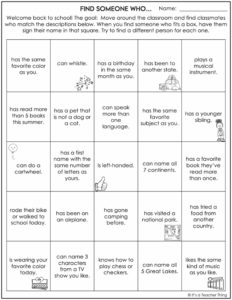
Create a bingo card with prompts like “has a pet reptile,” “has been out of the country,” or “plays a musical instrument.” Students circulate and try to find classmates who match the descriptions. Bonus: it’s a subtle way to get them talking and learning names. See an example below.
13. Student Snapshot Cards
Give each student a notecard to complete with key info: name (with pronunciation tips!), favorite subject, something they’re nervous about, something they’re excited about, and one thing they want you to know about them. These make great reference tools as you learn about your class and can guide your early lesson planning and check-ins.
14. Classroom Constitution
After a short discussion on what makes a class successful, work together to create a “Classroom Constitution.” Students brainstorm values (respect, responsibility, effort) and translate those into classroom agreements. Display the final version and have each student sign it. It’s a powerful way to co-create classroom culture.
15. Playlist of Our Year
Ask students to choose a song that describes how they’re feeling about the school year (or that represents who they are). Compile the responses into a class playlist on the board or digitally. It’s a creative way to connect and gives you insight into your students’ personalities and emotions as they enter your room.
You don’t need to reinvent the wheel each August. These back to school activities combine movement, creativity, writing, and connection—without overwhelming you or your students. If you’re a new teacher, try 2–3 to start and build from there. Veteran teachers, these options are easy to adapt and offer a fresh take on first week routines.
Your goal is to leave that first week of school with students who feel seen, safe, and excited to come back on Monday. These back to school activities will help get you there.
Looking for more classroom-ready ideas? Check out the Back-to-School Brochure and One Word Poster Project—no prep, just print and go.
Pin this blog post to a relevant board for later.


Leave a Reply